
If you’ve ever thought about starting a web hosting business in Nigeria or you’re already running one then WHM is something you’ll definitely come across. And once you understand it, you’ll realize it’s actually one of the most powerful tools you can have in your digital toolkit.
Think of WHM as a control center. It’s where you, as a reseller or hosting provider, manage multiple websites, clients, and hosting accounts from one place. Instead of handling everything manually or jumping between systems, WHM brings everything together in a structured and efficient way. It’s like owning a mini hosting company without needing to build everything from scratch.
What is WHM?
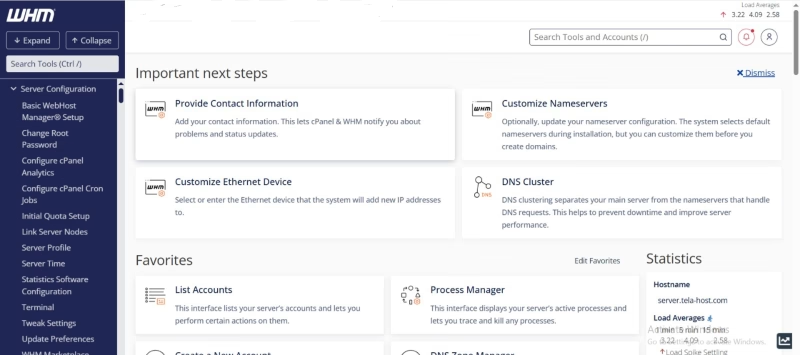
WHM stands for Web Host Manager, and the name pretty much explains what it does. It’s a platform designed to help you manage web hosting services efficiently. But don’t let the name fool you, it’s not just about managing websites. It’s about managing an entire hosting business.
When you log into web host manager, you’re stepping into the role of a hosting provider. You get access to tools that let you create hosting packages, allocate server resources, and control how each account operates. It’s like being handed the keys to a digital real estate empire, where each hosting account is a property you can customize and manage.
In Nigeria, where digital businesses are growing rapidly, WHM gives resellers the ability to offer hosting services under their own brand. This is known as white labeling, and it’s a big deal. Your clients don’t see the backend provider, they see you. That means you build your brand, your reputation, and your customer base independently.
What’s even more interesting is that web host manager doesn’t require deep coding knowledge. Sure, there’s a learning curve, but it’s manageable. With a bit of practice, you can confidently navigate the system and start building your hosting business.
How WHM Works
When you create a hosting account, WHM allocates specific resources like storage space, bandwidth, and email capabilities to that account. It’s all automated, which means you don’t have to manually configure each detail.
Imagine you’re running a small hosting business in Lagos. A client signs up for your service, and within minutes, you can create their account, assign a package, and send them login details. WHM handles the heavy lifting, ensuring everything is set up correctly.
One of the reasons web host manager is so popular among Nigerian resellers is its efficiency. Time is money, and web host manager saves both. Instead of spending hours setting up accounts, you can do it in minutes. That means you can focus more on growing your business and less on technical headaches.
It also integrates seamlessly with tools like cPanel, which your clients will use to manage their own websites. So while you’re in control at the top level, your clients have their own space to work in. It’s a well-structured system that keeps everything organized and scalable.
The Relationship Between WHM and cPanel
If WHM is the engine room of a hosting business, then cPanel is the driver’s seat your customers sit in. These two tools are deeply connected, and understanding how they work together is what separates an average reseller from someone running a smooth, professional hosting operation in Nigeria.
Imagine you own a block of apartments. Web host manager is what you use to manage the entire building, assign rooms, control utilities, and monitor everything. Meanwhile, cPanel is what each tenant uses inside their own apartment to arrange furniture, cook meals, and live their daily life. That’s exactly how WHM and cPanel function together.
For Nigerian resellers working with providers like us at telaHosting, this relationship is incredibly valuable. It means you don’t have to micromanage your clients’ websites. Instead, you provide them with cPanel access, and they handle their own files, emails, and domains—while you oversee the bigger picture through web host manager.
Key Differences Between WHM and cPanel
To avoid confusion, let’s break down the core differences in a simple comparison table:
| Feature | WHM | cPanel |
| User Type | Resellers & Admins | End Users (Clients) |
| Function | Manages multiple hosting accounts | Manages a single website/account |
| Access Level | High-level server control | Limited to individual account |
| Main Purpose | Business management | Website management |
| Customization | Create packages & limits | Upload files, manage emails |
This difference is important because it defines your role as a reseller. You’re not just offering hosting, you’re providing a structured service powered by WHM, while your clients enjoy the simplicity of cPanel.
Why They Work Better Together
WHM and cPanel are like two halves of a well-oiled machine. Without web host manager, managing multiple clients would be chaotic. Without cPanel, your clients would struggle to control their own websites.
For Nigerian businesses, this combination is a game-changer. Many small business owners don’t have technical expertise, so giving them access to cPanel empowers them to manage their online presence without constant support. At the same time, WHM ensures you maintain control over performance, security, and resource allocation.
This balance creates a professional hosting experience that builds trust. And in a competitive market like Nigeria, trust is everything.
Why WHM Matters for Nigerian Hosting Resellers
Growth of Web Hosting in Nigeria
Over the past few years, Nigeria has seen a massive surge in online businesses. From e-commerce stores and blogs to fintech startups and personal brands, everyone wants an online presence. And every website needs hosting.
This demand has created a unique opportunity for resellers. Instead of building expensive infrastructure, you can leverage platforms like WHM to start your own hosting business with minimal upfront cost.
Internet penetration in Nigeria continues to grow steadily, with millions of users coming online each year. That means more websites, more domains, and more hosting needs. It’s a market that’s far from saturated.
Opportunities for Entrepreneurs
If you’re entrepreneurial-minded, WHM opens doors. You can:
- Start your own reseller hosting brand
- Offer domain and hosting bundles
- Target small businesses and startups
- Create recurring income streams
What makes this especially attractive in Nigeria is the low barrier to entry. With a reliable provider like us at telaHosting, you don’t need to worry about server maintenance or uptime. You focus on sales and customer relationships while the backend is handled for you.
It’s not just a side hustle—it can grow into a full-fledged business.
Key Features of WHM Every Reseller Should Know
WHM isn’t just about creating accounts. It comes packed with features that make managing a hosting business efficient and scalable. Let’s explore the ones that matter most.
1. Account Management Tools
At the heart of WHM is its ability to manage multiple hosting accounts effortlessly. You can create, suspend, delete, and modify accounts with just a few clicks.
This level of control is essential for resellers. Imagine handling 50 clients manually—it would be overwhelming. Web host manager simplifies everything, allowing you to focus on growth instead of admin tasks.
You can also assign different packages to different clients. For example, a small blog might need minimal resources, while an e-commerce site requires more power. Web host manager lets you tailor each account accordingly.
2. Server Monitoring and Control
Another powerful feature is server monitoring. WHM provides insights into:
- CPU usage
- Disk space
- Bandwidth consumption
This helps you ensure your server is running smoothly. If something goes wrong, you can detect it early and take action.
For Nigerian resellers, this is crucial. Internet infrastructure can sometimes be unpredictable, so having visibility into your server’s performance gives you an edge.
3. Security Features in WHM
Security is a major concern in today’s digital world, and WHM doesn’t take it lightly. It includes tools for:
- SSL certificate management
- Firewall configuration
- IP blocking
- Backup management
These features help protect your clients’ websites from threats. And when your clients feel secure, they’re more likely to stay with you long-term.
How Nigerian Resellers Use WHM
1. Creating Hosting Packages
One of the first things you’ll do in WHM is create hosting packages. These are predefined plans that include:
- Disk space
- Bandwidth
- Number of email accounts
- Database limits
For example, you might offer:
- Basic Plan for small websites
- Standard Plan for growing businesses
- Premium Plan for high-traffic sites
This structure makes it easier to sell your services. Clients can choose a plan that fits their needs without confusion.
2. Managing Client Accounts
Once clients sign up, you use WHM to create and manage their accounts. This includes:
- Setting up domains
- Assigning packages
- Providing login details
Everything is streamlined, which means you can onboard new clients quickly and professionally.
3. Branding and White Labeling
One of the biggest advantages of WHM is white labeling. This allows you to brand the hosting service as your own.
Your clients won’t see telaHosting, they’ll see your business name, logo, and identity. This builds credibility and helps you establish a strong presence in the market.
Benefits of Using WHM for Resellers in Nigeria
- 1. Cost-Effective Business Model: Starting a hosting business traditionally requires heavy investment. But with WHM, you can start small and scale gradually. You don’t need to buy servers or hire engineers. Everything is managed for you, reducing costs significantly.
- 2. Scalability and Flexibility: As your business grows, WHM grows with you. You can upgrade your resources, add more clients, and expand your offerings without major disruptions. This flexibility is perfect for the Nigerian market, where businesses often start small and scale over time.
WHM vs Other Hosting Control Panels Comparison Table
| Feature | WHM | Plesk | DirectAdmin |
| Ease of Use | High | Medium | Medium |
| Popularity in Nigeria | Very High | Moderate | Low |
| Integration with cPanel | Native | Limited | None |
| Reseller Features | Advanced | Moderate | Basic |
WHM stands out because of its deep integration with cPanel and its reseller-friendly features.
Challenges Nigerian Resellers Face with WHM
- Technical Learning Curve: WHM is powerful, but it can feel overwhelming at first. New users may struggle with the interface and terminology. The good news is that with practice and support from providers like us, it becomes much easier.
- Infrastructure Limitations: In some parts of Nigeria, internet connectivity can be inconsistent. This can affect how resellers manage their services. Choosing a reliable hosting provider helps minimize these challenges.
Working with a Nigerian-based provider like us at telaHosting means you get support that understands your environment.
You’re not dealing with time zone issues or generic responses. You get real help when you need it. We provides stable servers, fast performance, and strong uptime. This ensures your clients get the best experience possible.
Conclusion
WHM is more than just a tool, it’s a gateway into the web hosting business. For Nigerian resellers, it offers a practical, scalable, and profitable way to enter the digital economy. With the right approach and support from providers like us at telaHosting, you can build a strong hosting brand and grow it over time.
FAQs
1. Is WHM difficult to learn?
Not really. It has a learning curve, but with practice, it becomes easy to use.
2. Can I start a hosting business with WHM in Nigeria?
Yes, many entrepreneurs are already doing it successfully.
3. Do I need coding skills to use WHM?
No, basic computer knowledge is enough to get started.
4. What is the difference between WHM and cPanel?
Web host manager manages multiple accounts, while cPanel is used by individual users.
5. Why choose telaHosting for WHM reseller hosting?
Because it offers reliable infrastructure, local support, and reseller-friendly solutions.